
Personalized Medicine: Our Mission
The Center for Applied Proteomics and Molecular Medicine’s (CAPMM) mission is to:
- Create new technologies and make basic science discoveries in the field of disease pathogenesis
- Apply these discoveries and technologies to create and implement strategies for disease prevention, early diagnosis and individualized therapy.
The primary emphasis of our disease research is cancer, but new technologies developed in the center are being applied to a number of important human diseases including cardiovascular disease, diabetes, and obesity, as well as liver, ocular, neurodegenerative and infectious diseases.
Personalized medicine strives to provide the right medicine for the right patient with the lowest toxicity. Research, like that being done by the Center for Applied Proteomics and Molecular Medicine, provides strategies for personalized treatment with the goal of providing physicians key missing molecular information about the disease in each of their patients and improving the quality of life for patients.

CAPMM: Research Highlight
George Mason University | Marissa Howard
It isn’t often that someone graduates with a PhD and a scientific discovery, but George Mason University researcher Marissa Howard was no ordinary student.
Read: Mason postdoc leads scientific breakthrough that could revolutionize cancer treatment
Research and Technology
Personalized medicine strives to provide the right medicine for the right patient with the lowest toxicity. Take a minute to view all the progress our team is doing in the field of Personalized Medicine.
View all of our research:
Publications
View all published works over the years from our dedicated research teams.
View Publications:
Educational Advancement
Are you a graduate student or undergraduate looking for way to work with CAPMM, or the courses the researchers from our program teach?
View all Education information:
- Mason postdoc leads scientific breakthrough that could revolutionize cancer treatment
 It isn’t often that someone graduates with a PhD and a scientific discovery, but George Mason University researcher Marissa Howard was no ordinary student. Marissa […]
 - Mason scientists in I-SPY 2 trial discover first ever signatures of global resistance and response to prioritize breast cancer treatment selections, including in triple negative cases
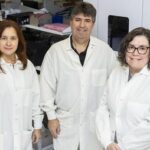 The proprietary LCM-RPPA protein activation mapping technique of breast tumors identifies three biomarkers associated with global resistance and response, several new drug targets and predictive […]
 - Mason named to top 100 list for patents awarded in 2022
 Mason named to top 100 list for patents awarded in 2022 Colleen Rich Thu, 10/12/2023 – 09:30 In This Story People Mentioned in This Story […]